Category: Uncategorized

  • The Origin Story Behind Elijah’s Baby Bucket List

    The Origin Story Behind Elijah’s Baby Bucket List

    Origin story of Elijah’s Baby Bucket List. A journey of faith, family, and choosing joy on purpose.

    Some stories don’t start with a plan. They start with a moment, the kind that splits your life into a before and an after. For me, that moment happened in a neurologist’s office. I heard the words no parent is ever prepared to get. A terminal prognosis. With a future full of unknowns. A timeline no one could promise. The origin story of Elijah’s Baby Bucket List began right there in that office.

    As a single mom of ten, I felt the weight of that moment. It was both crushing and clarifying. There was no one to hand the decision-making over to. No one to trade shifts with. No one to steady the room when it started to spin. It was just the children who were looking to me for strength, and me.

    I remember holding this tiny sleeping baby. The world tilted. I had only one clear thought: If time is uncertain, then joy cannot wait.

    That single conviction became the heartbeat of everything that followed.

    The Drive That Changed Everything

    From the hospital parking garage, I decided to pivot. I loaded Elijah and his siblings into the car and started driving. There was no itinerary or hotel reservation. I had no plan beyond getting to the ocean. Thirteen hours from Illinois to Jacksonville Beach, chasing something I couldn’t name yet. Hope. Clarity. Maybe a miracle.

    When we arrived, the world felt strangely still. The waves rolled in like a promise. I told my children the truth about Elijah’s diagnosis. We cried. We held each other. And then, in the most unexpected moment of peace, we looked out at the ocean. The beginning of something sacred.

    That day wasn’t just the start of a trip. It was the start of Elijah’s Baby Bucket List.

    A group of five children posing together outdoors with a scenic mountain backdrop. One older child is holding a baby, while the others are smiling for the camera.
    A group of five children, sitting on the shore of a beach, with waves gently washing over their legs. They are wearing swimsuits and facing the ocean under a partly cloudy sky.

    A Vow Made at the Water’s Edge

    Standing on that shoreline, I made a vow. Elijah and his siblings would have an incredible life together. Their life would be overflowing with wonder, connection, and joy.

    Not someday. Not when things were easier. Or when we had more time. But now.

    We would chase sunsets and mountaintops. Find beauty in the ordinary and the extraordinary. We would choose joy on purpose, even when the world felt heavy.

    And we would do it together.

    From One Trip to a Movement

    What started as a spontaneous drive to the ocean turned into a mission. It has carried us through forests, mountains, lakes, and long stretches of open road. Become a way of living. It is rooted in faith and resilience. It includes the belief that accessibility should never be a barrier to joy.

    As we traveled, I documented everything. Noted the wins, the challenges, and the accessibility gaps. I captured the moments of awe and the kindness of strangers. Elijah’s smile can light up an entire trail.

    People began following our journey. Then sharing it. Then asking how they can help.

    What started as a mother’s vow has become a global community. A resource. A movement for accessible family travel.

    Group of four children and a young adult posing in front of a large rock formation under a clear blue sky.
    A diverse group of people, including children and adults, wearing life jackets, posing enthusiastically by a lake. Some are holding paddles, and one individual is in a wheelchair. The background features trees and water activities.

    Why This Story Still Matters

    Every partnership, every interview, every destination we visit, it all comes back to that first moment on the beach. The vow. The purpose. The belief that families like mine deserve to experience the world together with dignity, comfort, and joy. The origin story of Elijah’s Baby Bucket List has shaped our family. It has also influenced a wider community.

    Elijah’s Baby Bucket List isn’t about checking off places. It’s about choosing joy before fear. Connection before convenience. Faith before certainty.

    It’s about living fully, right now. And giving others the courage to do it too!

    The Mission Going Forward

    Today, our journey continues with a bigger purpose:

    • advocating for accessible travel
    • partnering with destinations ready to welcome families like ours
    • creating resources for caregivers
    • building a nonprofit to support epic adventures for medically complex families
    • and telling the stories that remind us all to savor the moments that matter

    Because if there’s one thing this journey has taught me, it’s this: Joy is not something you wait for. It’s something you choose again and again.

    And we are choosing it every day!

    Two children one in a wheelchair posing in front of a large Halloween-themed pumpkin display in a park, with a cloudy sky in the background.
  • Discover Accessible Lancaster, PA

    Discover Accessible Lancaster, PA

    A Joy‑Filled, Accessible Winter Escape for Families

    Lancaster, Pennsylvania, is one of those rare destinations that wraps you in warmth the moment you arrive. It’s creative, family‑centered, and deeply welcoming. If you’re looking for an Accessible Lancaster, PA experience, you’ll find that here! Discover Lancaster offers dignity and ease. This is true for families with wheelchairs, sensory needs, or medical equipment. The experience is joyful and comes without compromise.

    Our recent winter adventure in Lancaster was exactly that. It was a trip filled with art, imagination, science, and history. Cozy moments also reminded us why this destination has become one of our core accessible-family-travel favorites.

    Whether you’re planning a weekend getaway or building a full itinerary, this guide will help you discover Lancaster. Experience it through the lens of lived experiences. Enjoy the accessibility and unforgettable family fun.

    Where to Stay: Accessible Comfort at Eden Resort & Homewood Suites

    Eden Resort & Suites

    Eden Resort continues to set the bar for inclusive hospitality. From the moment we rolled in, the staff greeted us warmly. They made us feel seen and supported. This assistance immediately put us at ease.

    The rooms were spacious. They were designed with accessibility and comfort in mind. This design ensures that every guest can enjoy their stay. The layouts were thoughtful, with ample maneuvering space that allowed us to settle in without feeling cramped.

    Indoor amenities made it easy for Elijah to relax and explore safely. These included a portable pool lift. This was a feature we particularly appreciated. The lift not only enhanced his experience but also demonstrated the resort’s commitment to ensuring that all guests feel included.

    Even in winter, the resort felt like a welcome oasis. Cozy common areas invited guests to unwind and share stories. This created a sense of community that truly enriched our vacation experience.

    Interior view of a hotel lobby featuring a stone fireplace, modern decor, and a projection of the text 'Eden Resorts & Suites' on the tiled floor.
    A modern kitchen area featuring a sink, microwave, and stainless steel refrigerator, with upper shelves holding plates and cups. Two trash bins are placed under the counter.

    Homewood Suites by Hilton Lancaster

    Homewood Suites offers another excellent option for families needing space, comfort, and accessibility. With roomy suites, kitchenettes, and friendly staff, it’s a great home base for longer stays or multigenerational trips. The highlight for us is the two bathrooms, which make mornings so much faster!

    Additionally, the hotel provides complimentary breakfast. This allows families to start their day without the hassle of finding a place to eat. The convenience of having a fully equipped kitchenette allows guests to prepare meals and snacks. This is particularly helpful for those traveling with small children. It also benefits those adhering to specific dietary needs. Overall, Homewood Suites truly caters to the diverse needs of families, ensuring a pleasant and memorable stay.

    Tiny Town: Where Imagination Takes the Lead

    Tiny Town was a highlight for Elijah, and this visit was pure magic. He explored roles like doctor, stylist, mechanic, and farmer, each one sparking new stories and new friendships. The bubble dance party was a hit. The moment that impacted me the most happened when the kids declared something heartwarming. They said, “Our job helping make the world more accessible was their favorite!” That’s the kind of place Tiny Town is: playful, imaginative, and naturally welcoming.

    A colorful accessible play area resembling a garage, featuring a red toy car with an open hood displaying wooden engine parts. The sign reads 'Uncle Brent's Garage.'
    An easel displaying a colorful painting inspired by a starry night scene, featuring a large dark spire, rolling hills, and two buildings, surrounded by various artworks hanging on the walls of an art studio.

    Painting With a Twist: Art, Friendship, and a Footprint Masterpiece

    Our afternoon at Painting with a Twist Lancaster was one of those memory‑making moments you tuck away forever. We created a whimsical Starry Night painting. It featured Elijah’s footprint and turned into a piece of art. Now it carries both creativity and heart. He made new friends. We laughed, and we painted. The whole experience reminded us how healing and joyful accessible art spaces can be.

    The Copper Cup: Cozy Drinks to End the Day

    No Lancaster itinerary is complete without a stop at The Copper Cup. It’s the perfect place to wind down after a day of exploring. Enjoy warm drinks and cozy vibes. There’s a welcoming atmosphere that feels like home. For us, it was the ideal ending to a day filled with creativity and connection.

    Three individuals seated at a wooden table in a room with a concrete wall. One person is smiling, another is giving a thumbs up, and the third is gently holding a child.
    A cozy display featuring a stuffed teddy bear in a black shirt, colorful lollipops on sticks, various snacks in the background, and a wooden sign that reads 'Calories don't count outside your zipcode.'

    Railroad Museum of Pennsylvania: A Journey Through History

    For train lovers and, honestly, for anyone who appreciates American history, the Railroad Museum of Pennsylvania is a must‑visit. The exhibits are immersive, the pathways are wide and accessible, and the storytelling is rich.

    North Museum of Nature & Science: Hands‑On Wonder

    The North Museum is a treasure for curious minds. The exhibits are hands‑on. It features interactive science displays. The layout works well for wheelchairs and strollers. It’s a place where learning feels like play.

    A group of three children interacting in a playful accessible indoor setting filled with floating bubbles. One child is sitting in a wheelchair, joyfully reaching for the bubbles, while another child stands beside them, holding their hands. The third child observes the scene with a smile, surrounded by bright decor and modern furniture.

    A child in a wheelchair looks up at a colorful, wavy net structure, part of an interactive exhibit titled 'Sky Bridge'. Several adults and children are engaged in activities around the exhibit in a brightly lit indoor space.

    Lancaster Science Factory: Engaging STEM Experiences for All

    Another fantastic stop is the Lancaster Science Factory. Science comes to life there through interactive exhibits. Hands-on activities engage both kids and adults. The facility is designed with accessibility in mind, allowing everyone to participate freely in experiments and exploration. Whether you are building a robot or experimenting with physics, the Science Factory provides an unforgettable experience. It ignites curiosity and fosters a love of STEM.

    Hands-on House: A Partner in Accessibility Growth

    Our collaboration with Hands-on House made this stop especially meaningful. Together, we explored ways to enhance accessibility from ramps to sensory‑friendly zones to multilingual signage, including Braille. Their commitment to inclusivity is real, and families will feel that as they explore the museum’s playful, interactive spaces.

    Interior view of a colorful barn play area featuring a red building with a corrugated metal silo and a honeycomb-shaped exhibit in the background.
    A stylish bar area with shelves displaying various bottles of liquor, and two takeout bags and boxes labeled 'Bistro' on the counter.

    Why Lancaster Belongs on Every Family’s Travel List

    Lancaster isn’t just a destination; it’s a community that welcomes families of all abilities with open arms. It’s a place where:

    • Creativity is accessible
    • Learning is hands‑on
    • History is immersive
    • Hospitality is genuine
    • And joy is always within reach

    Enjoy the cozy charm of The Copper Cup and the inclusive magic of Tiny Town. Experience accessible hotel stays and visit art studios that celebrate every child’s abilities. Lancaster offers a winter escape filled with warmth, wonder, and unforgettable memories.

    If you’re looking for a destination that blends accessibility, family fun, and heartfelt experiences, Lancaster, PA is ready to welcome you.

    Tips for an Accessible Family Trip to Lancaster, PA

    1. Plan Your Itinerary Around Accessibility

    • Research attractions beforehand to ensure they meet your family’s accessibility needs. Many places in Lancaster have accessible entrances, restrooms, and pathways.

    2. Book Accommodations with Accessibility Features

    • Choose hotels like Eden Resort or Homewood Suites that are designed with accessibility in mind. Look for features such as roll-in showers, grab bars, and wheelchair-friendly layouts.

    3. Leave Room for Flexibility

    • Understand that if plans need to change due to weather or other unforeseen circumstances. Having a flexible mindset can help make the trip more enjoyable.

    By keeping these tips in mind, you can make the most of your visit to Lancaster, ensuring that your family enjoys a memorable and inclusive experience.

    Two children engaged in a learning activity; one child is sitting in a wheelchair while the other is holding up a mask 'Ocelli Eyes' against a colorful backdrop with honeycomb structures.

  • Top 10 Wheelchair‑Friendly Destinations for Families

    Top 10 Wheelchair‑Friendly Destinations for Families

    Real Places That Welcomed Elijah With Joy

    Traveling with a wheelchair and a medically complex child reshapes the way you see the world. If you are searching for information on Wheelchair Friendly Destinations, you start noticing the slope of a ramp, the warmth in a stranger’s smile, the way staff speak to your child instead of around them. For our family, accessibility isn’t a bonus; it’s the doorway to possibility.

    Through Elijah’s Baby Bucket List, we’ve discovered destinations that didn’t just make space for us; they embraced us. What follows isn’t a generic list pulled from the internet. These are 10 places we’ve personally visited, where Elijah was welcomed with dignity, joy, and genuine inclusion.

    And each one reminded us why we keep saying yes to adventure.

    1. St. Louis, Missouri, Where Big Adventures Meet Big Heart

    Our journey begins close to home, in a city that showed us early on what true wheelchair friendly destinations can feel like. At the St. Louis Aquarium, a staff member knelt down to Elijah’s level and spoke directly to him a simple gesture that meant everything. With smooth pathways, elevators, and wide viewing areas, St. Louis became a place where we could explore without hesitation.

    Why it works: Big‑city experiences paired with Midwest kindness create a foundation of trust for families like ours.

    Two children, one in a wheelchair and the other standing beside, look out a large clock window. The scene is in black and white, featuring a brick wall backdrop.
    A giraffe interacts with a young girl and a boy in a wheelchair, while a woman assists them. The scene is set outdoors at a zoo with a blue building in the background.

    2. Springfield, Missouri Cars, Wildlife & Accessible Wonder

    From St. Louis, the road leads naturally to Springfield a city that surprised us with how seamlessly it blends nostalgia and accessibility. Elijah adored the Route 66 Car Museum, where wide aisles let him roll right up to the classics. But the real magic happened at Wild Animal Safari Park, where he stayed safely positioned in his wheelchair inside the van as zebras and camels wandered right up to the windows.

    Why it works: Springfield proves that accessibility doesn’t have to be complicated to be meaningful.

    3. Wichita, Kansas: Most Wheelchair Friendly Destination

    Continuing west, Wichita offered one of the most inclusive wildlife experiences we’ve ever had. Tanganyika Wildlife Park didn’t just accommodate Elijah; they adapted the experience so he could participate fully. When it comes to wheelchair friendly destinations, this is one of our favorites! Smooth pathways, level entrances, and staff who instinctively understood how to support him made the day feel effortless.

    Why it works: It’s immersive, hands‑on, and designed with families of all abilities in mind.

    A child in a wheelchair smiles as they interact with a rhinoceros. Another person leans in to hold the child's hand, creating a joyful moment at a zoo.
    A small child interacts with a large shadow of a dog shadow puppet and a boy in a wheelchair on a lit background, creating a playful scene.

    4. Los Angeles, California Big City, Big Accessibility Wins

    From the Midwest to the West Coast, Los Angeles surprised us with how navigable a major city can be. At the GRAMMY Museum, Elijah lit up at the music and lights, and the accessible layout meant he could explore every floor with ease. LA reminded us that iconic experiences don’t have to be out of reach.

    Why it works: Thoughtful design meets world‑class attractions.

    5. Lancaster, Pennsylvania, Slower Pace, Bigger Welcome

    Shifting from the bustle of LA to the quiet beauty of Lancaster felt like an exhale. The rolling farmland, the slower pace, and the genuinely welcoming community made it one of the most peaceful accessible trips we’ve taken. Smooth pathways and inclusive attractions allowed Elijah to participate fully without sensory overload.

    Why it works: Lancaster offers accessibility wrapped in calm, a gift for medically complex families.

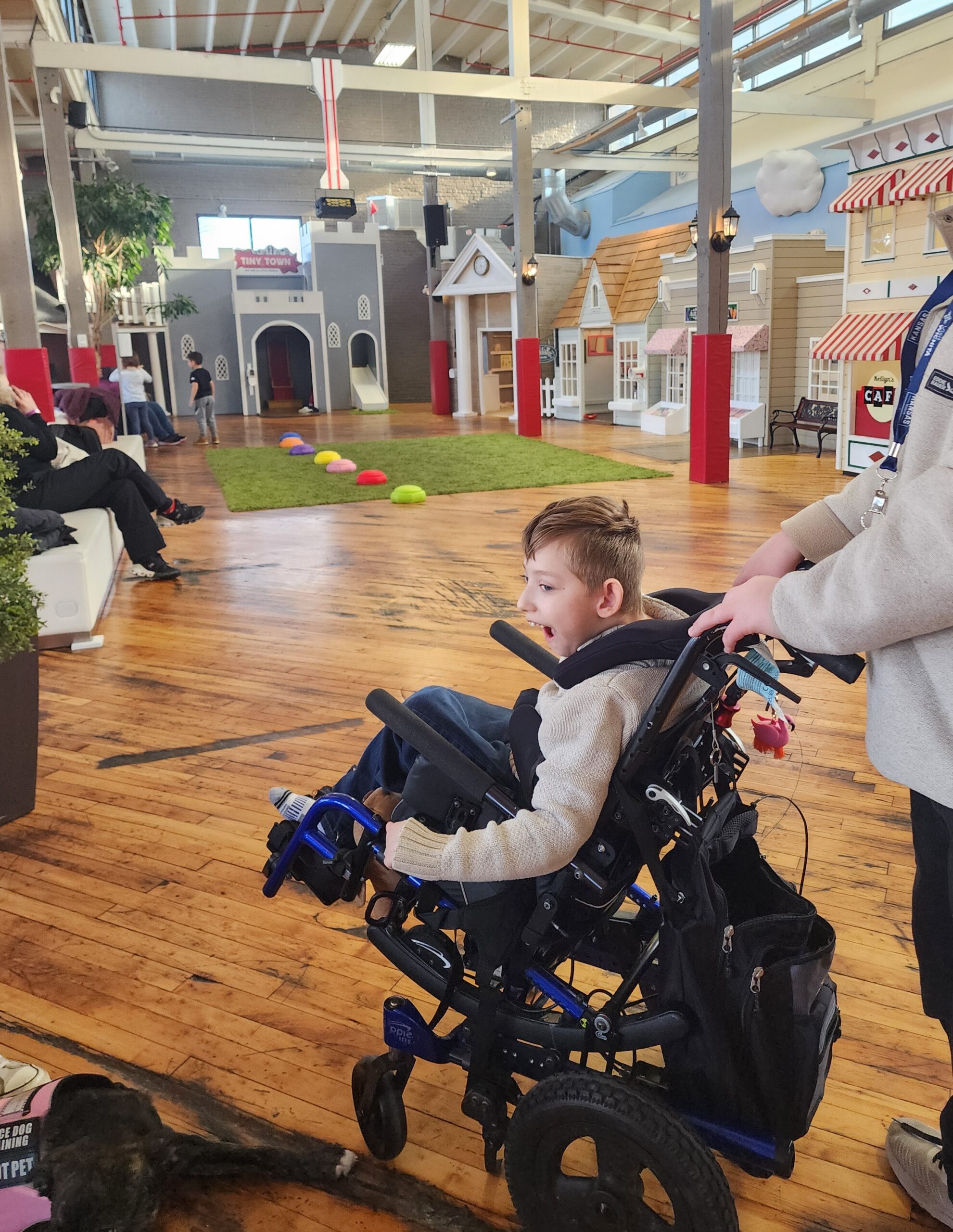
    A young boy in a wheelchair smiles while being pushed through a colorful play area with toy buildings and grass. A therapy dog lays nearby.
    A child in a wheelchair gazes at the ocean from a balcony while an older child points towards the beach below, where beach chairs are set up on the sand.

    6. Panama City Beach, Florida Beaches That Truly Include Wheelchairs

    From farmland to the ocean, Panama City Beach gave Elijah something he rarely gets: direct access to the shoreline. Beach wheelchairs, accessible mats, and wide boardwalks made the beach feel possible and joyful. It’s also home to the Caregiving Moms Refresh Retreat, a place where caregivers finally get to rest.

    Why it works: PCB understands that accessibility at the beach isn’t optional; it’s transformative.

    7. Pigeon Forge, Tennessee Inclusion in the Heart of the Smokies

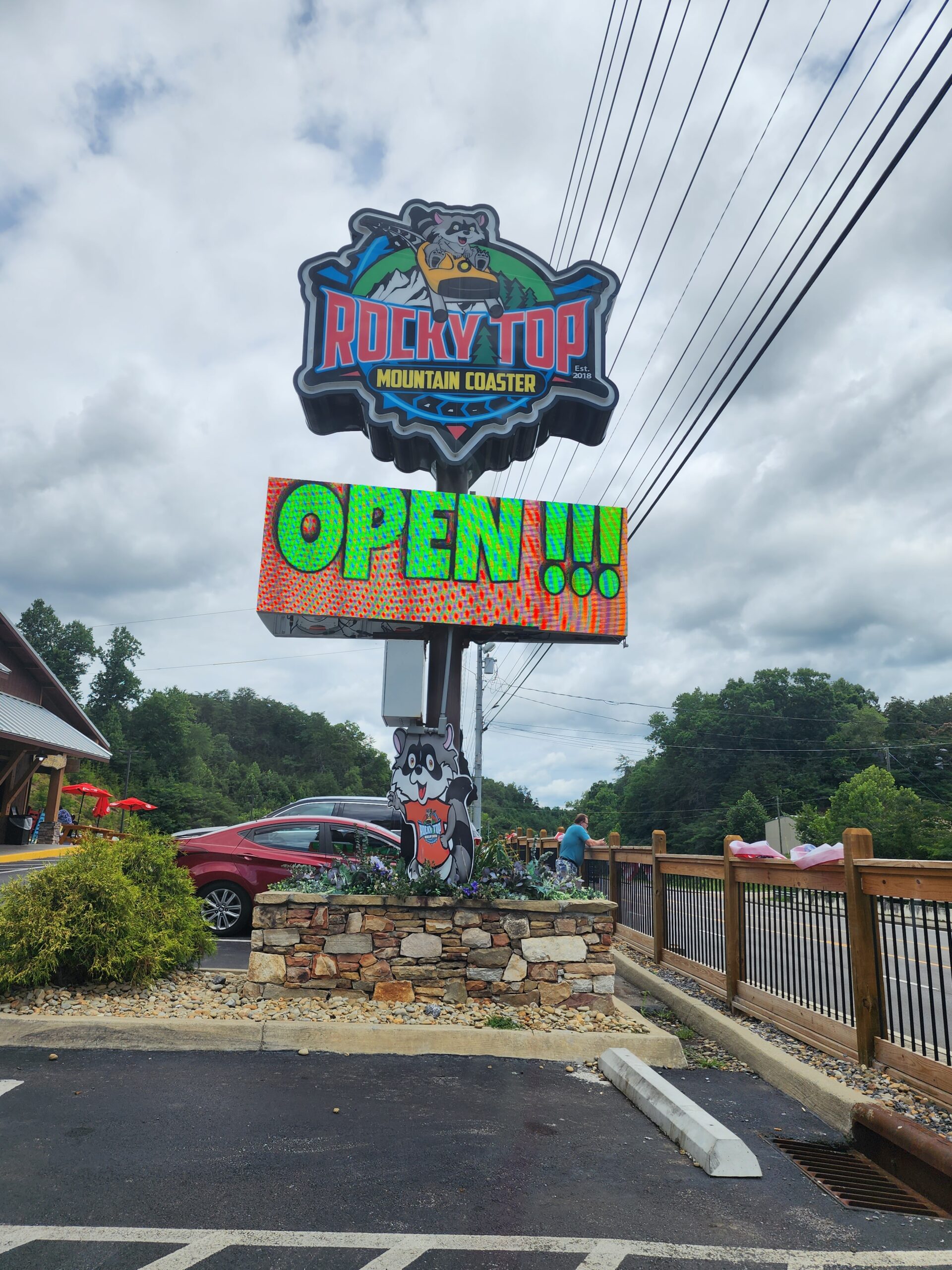
    Heading into the mountains, Pigeon Forge offered one of our most emotional moments of inclusion. At Rocky Top Mountain Coaster, the staff helped transfer Elijah into the cart with such care. My hesitation melted away. On the first turn, he let out a squeal of pure joy, loud enough that everyone in line smiled. When we returned, he signed “more, more, more.”

    A young staff member, whose sister has Spastic Cerebral Palsy, offered to hold Elijah while I got out. His kindness turned a simple ride into a moment of connection I’ll never forget.

    Why it works: Pigeon Forge blends big fun with genuine inclusion.

    A woman helps a young boy secure his safety harness in a ride at an amusement park, both smiling and excited.
    A stunning sunrise over the Grand Canyon, showcasing layered rock formations and vibrant colors in the sky.

    8. Grand Canyon, Arizona: A Place That Redefined Accessible Adventure

    From the Smokies to the Southwest, the Grand Canyon reminded us that even the biggest landscapes can be accessible. The paved Rim Trail, accessible overlooks, and smooth pathways allowed Elijah to experience the canyon’s vastness right alongside everyone else. Makes it one of our favorite outdoor wheelchair friendly destinations. At Mather Point, a gentle breeze hit his face. He let out a belly laugh. His laughter echoed across the canyon.

    Why it works: The Grand Canyon offers some of the most wheelchair‑friendly trails in the National Park system.

    9. Rapid City, South Dakota: Unexpected Joy in the Middle of a Breakdown

    Sometimes the best destinations aren’t planned. Rapid City became one of our most meaningful stops after a van breakdown forced us to slow down. Instead of frustration, we found accessible pathways, scenic overlooks that didn’t require hiking, and locals who helped without making us feel helpless.

    Why it works: Rapid City proves that accessibility and kindness can turn a stressful moment into a treasured memory.

    A young boy in a wheelchair watches excitedly as someone holds a snake in front of him, while another child photographs the moment. Others are present in the background.
    A smiling child in a wheelchair holds a stuffed animal while interacting with an adult man wearing glasses and a yellow cap, with a scenic view of a harbor in the background.

    10. San Diego, California: History, Heart, and True Accessibility

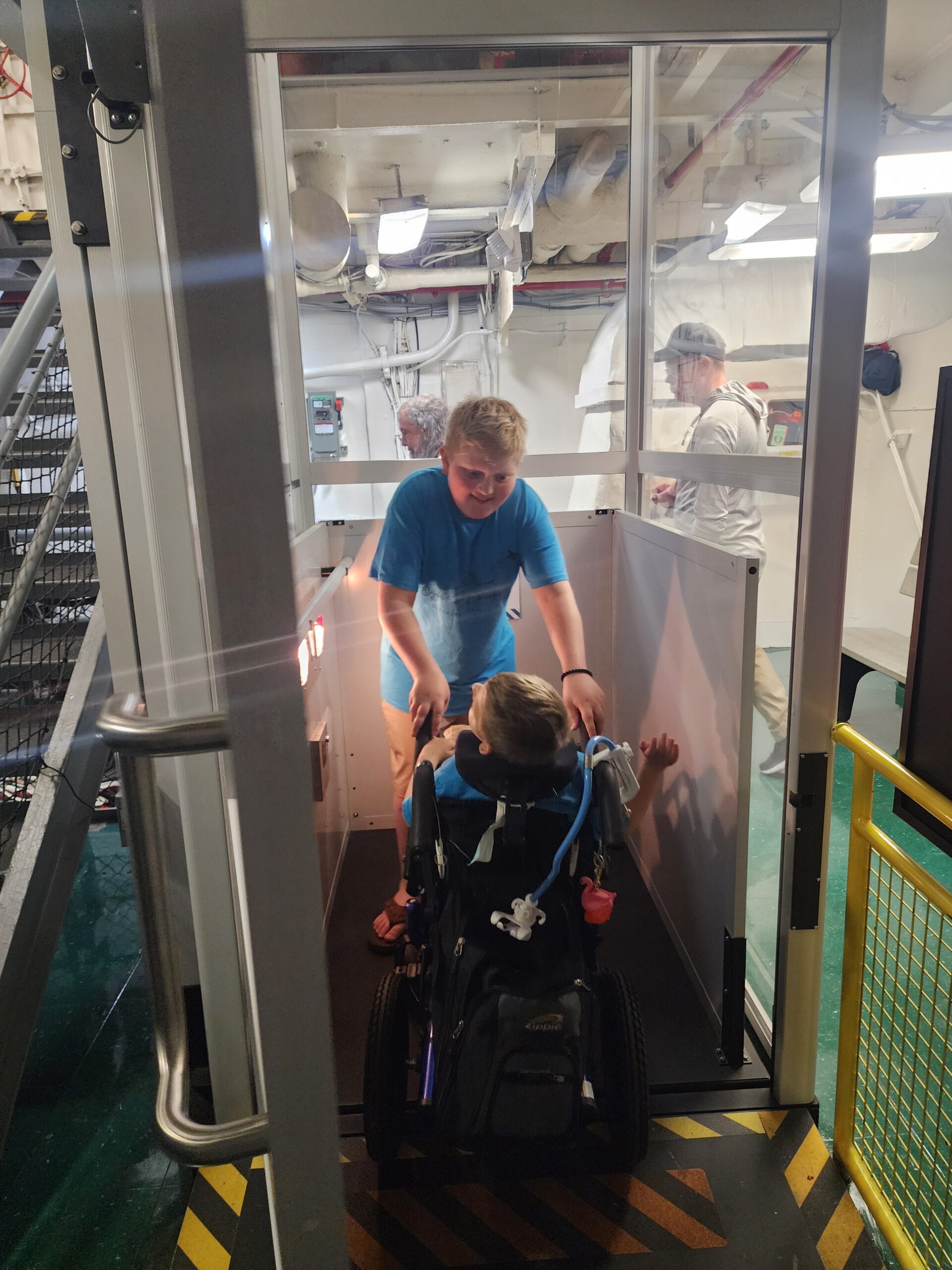
    Our journey ends on the coast. We board the USS Midway Museum in San Diego. This place showed us how history can be made accessible with intention. Elevators, wide pathways, and trained staff made navigating a massive aircraft carrier surprisingly smooth. Volunteers took the time to talk to Elijah, point out details, and make sure he felt included.

    Why it works: San Diego blends coastal beauty with thoughtful accessibility. This combination makes it one of the most inclusive big‑city destinations we’ve visited.

    What These Wheelchair Friendly Destinations Have in Common

    Across cities, coastlines, mountains, and deserts, one truth stayed constant: Accessibility is about dignity. Inclusion is about humanity.

    Every destination on this list offered:

    • Space
    • Flexibility
    • Kindness
    • Staff who didn’t make us feel like an inconvenience

    And that’s what accessible travel is really about, not perfection, but possibility. The essence lies in creating experiences that empower everyone, regardless of their abilities, to explore new places and cultures. It is about designing environments where barriers are eliminated and inclusivity is celebrated, ensuring that every traveler can embark on their journey with confidence and joy. By embracing adaptability and innovation, we can transform travel into a realm of endless opportunities for all.

  • Exploring Accessible Things to Do in Chicago with CityPass

    Exploring Accessible Things to Do in Chicago with CityPass

    As a single mom of a medically complex child, finding accessible things to do can be challenging. Thankfully, Chicago has a lot to offer, especially with the CityPass! This amazing ticket app enables us to explore the city’s top attractions at a discounted rate. Not only that, but it ensures these experiences are accessible to everyone. This includes those with disabilities. Here’s my personal overview of the accessible options available through CityPass in Chicago. I also share some vital information about facilities for families like ours.

    Why CityPass is a Game Changer

    CityPass helps visitors maximize their Chicago experience while saving money. It includes admission to popular sites. These include the Shedd Aquarium, Field Museum, Art Institute of Chicago, and Skydeck at Willis Tower. With the CityPass app, you can easily reserve your spots and find vital accessibility information. As a busy mom, I especially appreciate the ease of making changes. I can adapt our plans to meet my child’s needs. Allowing me to quickly reschedule from my phone if needed.

    Accessible Attractions

    1. Shedd Aquarium
      • The Shedd Aquarium is one of our favorites! It is fully equipped with ramps, elevators, and accessible restrooms. Families can request wheelchairs at the entrance, and service animals are welcome throughout the facility. Please note that it doesn’t provide dedicated accessible parking, so I recommend looking for nearby public options or alternative transportation if you need accessible parking. For a calmer experience, try to visit on weekday mornings when it’s less crowded.
    2. Field Museum
      • The Field Museum prioritizes accessibility by thoughtfully incorporating ramps and designated seating in theaters. Staff are specifically trained to support visitors with disabilities, and wheelchairs are available at no charge. Sensory-friendly maps and resources are also offered for families who need them. Planning ahead by reserving tickets and checking for special accessibility events can help ensure a smooth visit
    3. Art Institute of Chicago
      • This renowned museum is, indeed, committed to making art accessible. The Art Institute provides elevators, personalized assistance, and accessible restrooms. Large-print guides and assistive listening devices are available upon request. If you have a sensory-sensitive family member, visit during the museum’s quieter hours. You can also check their website for sensory-friendly programming.
    4. Skydeck at Willis Tower
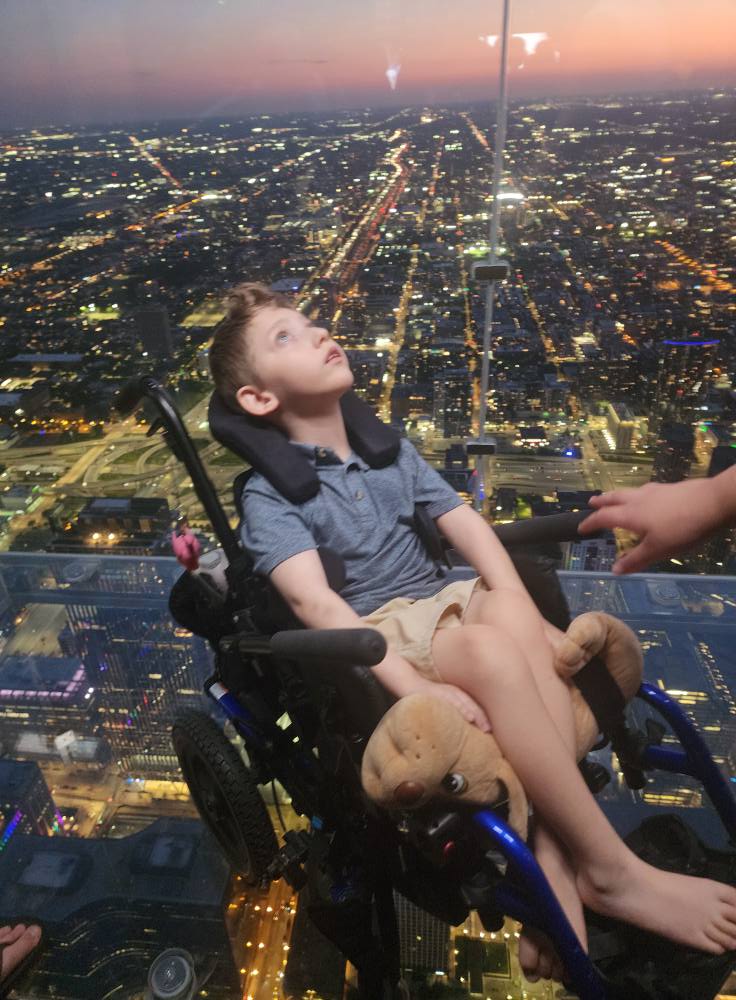
      • The Skydeck is one of the tallest buildings in Chicago, offering breathtaking views that everyone can enjoy. With accessible elevators and platforms, our family can create unforgettable memories while feeling at ease. They are not only ADA compliant, but also Sensory Compliant. Optional sensory bypasses are available in exhibits that are more stimulating.
    5. Shoreline Sightseeing Architecture River Tour
      • Undoubtedly, experiencing Chicago’s iconic architecture from the water is truly magical! We did a sunset tour, and the view is breathtaking! We learned so much! Accessible boats are equipped with ramps and designated seating for guests with mobility challenges. Audio guides provide detailed descriptions, and service animals are permitted onboard. If your family uses strollers or wheelchairs, be sure to inform staff when booking to ensure the best boarding arrangements.
    6. 360 CHICAGO Observation Deck
      • This observation deck is fully wheelchair accessible, featuring ramps and elevators. Amenities such as accessible restrooms and hearing assistance devices make it a kind and welcoming place for families.
    7. Griffin Museum of Science and Industry
      • This museum inspires curiosity with its interactive exhibits. Additionally, it’s a fantastic destination for my child, making learning fun and engaging for all ages. The museum is committed to accessibility, offering wheelchair ramps, audio guides for visually impaired visitors, and sensory-friendly spaces. Also, noise-canceling headphones and accessibility features on their app make it easier for families to take breaks as needed.
    8. Adler Planetarium
      • As a premier astronomical museum, it offers breathtaking views of the skyline and immersive educational programs. The Adler Planetarium is dedicated to accessibility.
      • It provides ramps, elevators, accessible restrooms, and wheelchair rentals. As a result, this makes it easy for everyone to explore the wonders of the universe. The facility welcomes service animals and offers sensory-friendly events throughout the year. Also, be sure to check their website in advance for the latest accessible programming and resources.

    Getting Around Chicago

    We drove our van. And so, we enlisted the help of SpotHero to conquer parking for our epic adventures. It practically rolled out the red carpet with accessible parking options. For any quick pit stops under 4 hours, we used ParkChicago; consequently, it was a lifesaver, allowing us to magically extend our time in small intervals right from my phone. Because, after all, when you are traveling with this crew, things can change in a second. Who doesn’t love a parking plot twist?

    Furthermore, transportation does not have to be hard for families with children needing special accommodations. In fact, Chicago’s public transport system has you covered:

    • Chicago Transit Authority (CTA) Buses and Trains
      • Most CTA buses and trains come equipped with ramps and designated areas for individuals using mobility devices. This makes our travel throughout the city smooth and accessible.
    • Ride-Sharing Services
      • Many ride-sharing options offer vehicles that are wheelchair accessible, providing flexibility in our movement around the city.

    Conclusion

    The CityPass enables us to explore Chicago’s vibrant attractions at a fantastic price; consequently, it ensures that there’s something for everyone, regardless of their needs. Moreover, while some facilities, like the Shedd Aquarium, may lack dedicated accessible parking, the majority of the attractions are welcoming and accommodating. This ultimately allows families like mine to enjoy a day out without worries. As a single mom, I face the challenges of raising a medically complex child; therefore, I highly recommend checking out the specific accessibility options before your visit. This, in turn, will enhance your experience. Chicago is waiting to be explored, and with CityPass, adventure is just a ticket away!

    Resources

    By using these resources, families can effectively plan ahead and seamlessly enhance their visit, thereby ensuring a fun and stress-free experience throughout the Windy City. Furthermore, each attraction is specifically dedicated to making the experience enjoyable for everyone, thus ensuring that no one is left out of the adventures. Ultimately, happy exploring!

  • Discover "Meeting the Need": A Hidden Gem in Keystone

    Discover "Meeting the Need": A Hidden Gem in Keystone

    Nestled just outside Rapid City in the charming town of Keystone lies a hidden gem: “Meeting the Need.” This unique camp was once a bustling tin mine in the 1800s. It has been lovingly transformed into a sanctuary for individuals with disabilities. It’s not just a place—it’s a testament to resilience, love, and the enduring spirit of community.

    A Legacy of Transformation

    The camp’s story began with tragedy and heartbreak. In 1997, Mary and Dallas Dietrich faced an unimaginable loss when a tragic accident took the lives of their children. After this devastation, they decided to honor their children in a special way. They created a space that would memorialize them. It would also offer joy and accessibility to others. Thus, “Meeting the Need” was born.

    An Inclusive Haven

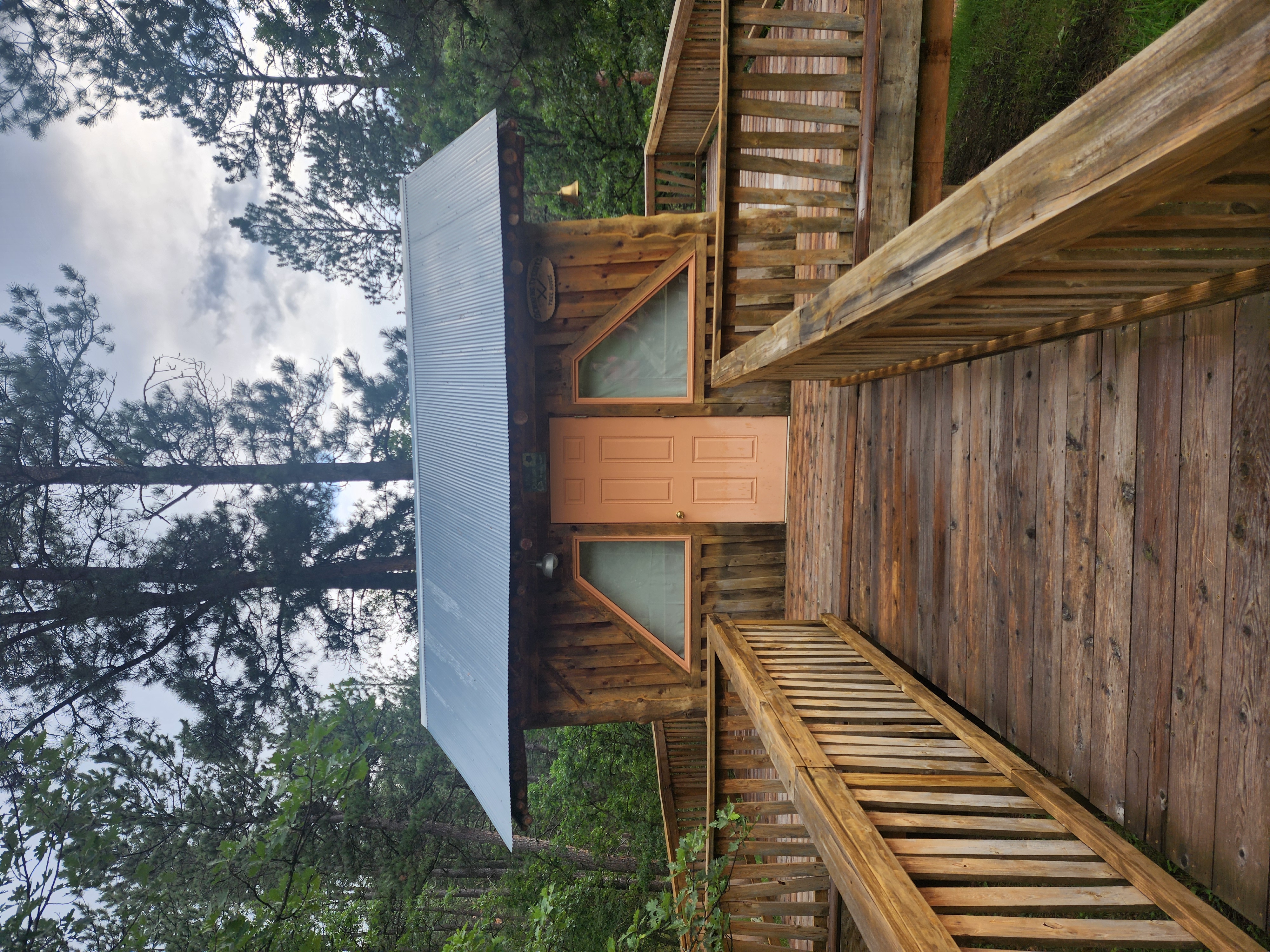
    The camp has been designed with accessibility at its core. It features ramps and walkways. Even a treehouse is accessible by a 200-foot ramp. This allows people in wheelchairs to enjoy a night under the stars.

    The facilities include:

    • A spacious shared kitchen
    • A dining area
    • Comfortable accommodations for caregivers
    • A Hoyer lift
    • A fully accessible bathhouse featuring four separate bathrooms with roll-in showers
    • As well as free laundry facilities

    Every detail has been thoughtfully considered. This ensures that everyone, regardless of their abilities, can immerse themselves in the beauty of the outdoors.

    A Warm Welcome

    Mary continues the mission she and Dallas embarked on, welcoming guests with open arms and a warm smile. Her dedication to inclusion is clear. She creates a welcoming environment. Every visitor feels like part of a larger family. The camp is not just about the physical space. It is about the deep connections and understanding that blossom within its grounds.

    A Must-Visit Destination

    For anyone traveling to the Black Hills, “Meeting the Need” is a must-visit destination. Whether you seek a peaceful retreat or wish to support a meaningful cause, this camp offers both. The experience transcends activities; it’s about the transformative power of compassion and community spirit.

    Plan Your Visit

    Open from May through September, the camp offers affordable accommodations, with special provisions for those with disabilities and veterans. To make a reservation, reach out to Mary and experience firsthand the magic and hope that Meeting the Need offers.

    In a world where barriers often overshadow accessibility, “Meeting the Need” shines as a beacon of possibility and love. Visit this extraordinary camp, and let its spirit inspire hope and renew your faith in humanity’s goodness.