
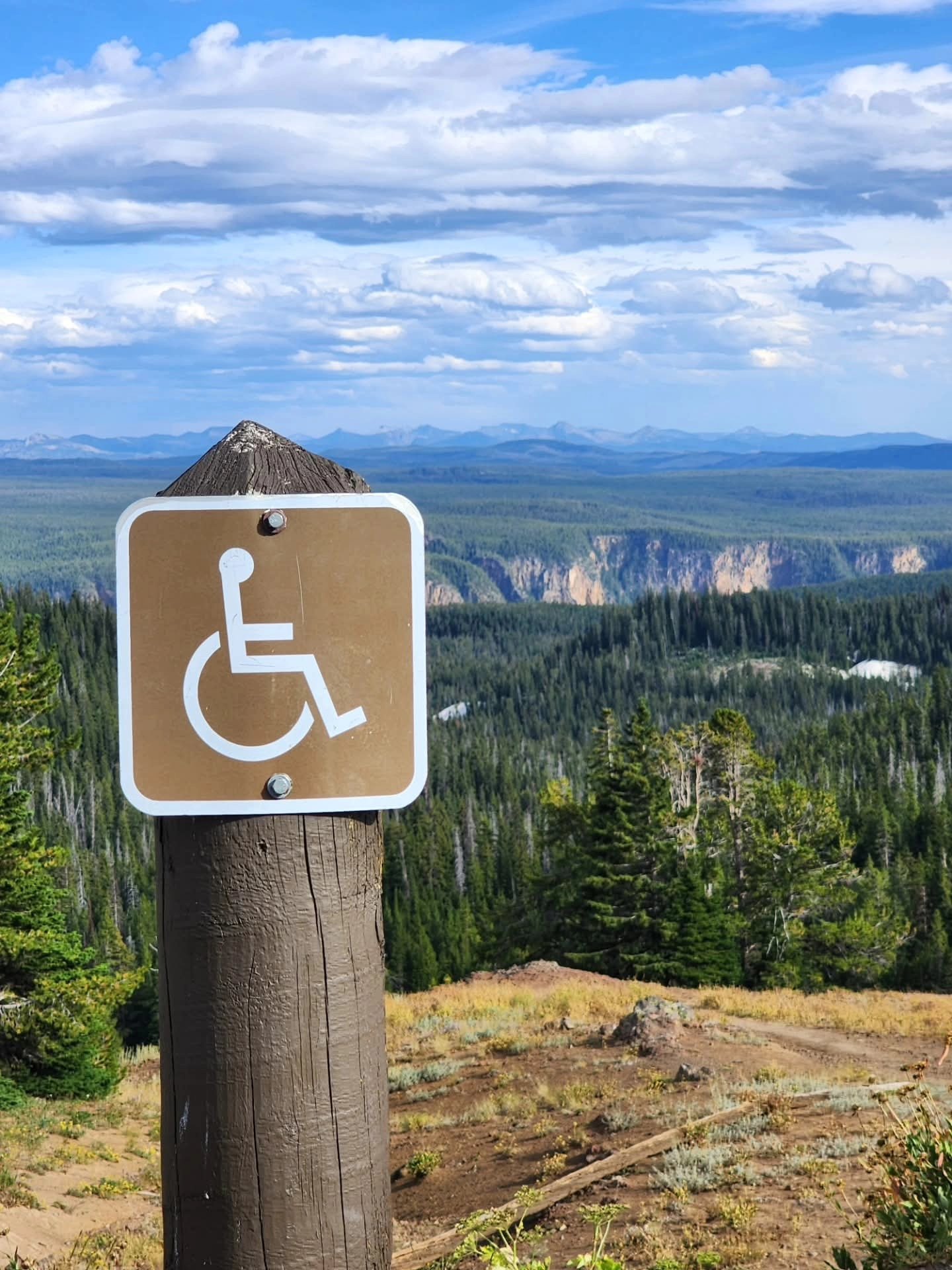
Yellowstone National Park is known for its geysers, wildlife, and dramatic landscapes, but what many families don’t realize is just how accessible this iconic destination can be. As a single mom traveling with a medically complex child and three other mini‑humans, accessibility isn’t a bonus for us. It’s the difference between participating and sitting on the sidelines.
During our multi‑day adventure through Yellowstone, we discovered accessible boardwalks. We enjoyed sensory‑friendly experiences and found crowd‑free viewpoints. The staff genuinely care about making the park welcoming for everyone. Here’s what accessibility in Yellowstone looks like through the eyes of a real family living it.
Day 1: The Drive From Cody Where Beauty and Resilience Meet
The drive from Cody into Yellowstone is the kind of beauty that sneaks up on you. One minute you’re winding through Wyoming’s rugged terrain, and the next you’re surrounded by landscapes so breathtaking they feel unreal.
We pulled off near a lake as the mountains opened up around us. Yellow wildflowers were growing right at the water’s edge, tiny bursts of sunshine against the stone and sky. As I stood there taking it in, I heard a soft hiss to my right. Isaiah and I turned to see a steam vent only a few yards away, quietly exhaling into the cool air.
It was such a gentle reminder of what Yellowstone really is: a place where beauty and harshness live side by side. And honestly, it felt like our life. The wildflowers and the steam vent, joy and challenge, are both part of the same story. Both are shaping us. Both remind me that even in the hardest seasons, something beautiful is still growing.
That moment set the tone for everything that followed.


Accessibility Starts at the Gate, Literally
When we entered Yellowstone, the accessibility wins started immediately.
The ranger handed us a full binder of accessible highlights throughout the park. It included every wheelchair‑friendly boardwalk and every viewpoint with smooth pathways. There was information about every accessible restroom and every area where mobility devices could comfortably navigate. It felt like someone had already walked the park with families like ours in mind.
If you’re disabled, you can get a free National Parks Access Pass. Everyone in your vehicle gets into Yellowstone at no cost. For families managing medical equipment and mobility devices, support is crucial. This is especially true for the unpredictable needs of a medically complex child.
The kids were also given a Yellowstone animal‑spotting coloring page, which quickly became the most intense competition in the car. I’m almost convinced the park hands these out so you’re extra alert for anything that might dart across the road, a brilliant safety strategy disguised as fun.
Visitors Center, Inspiring People & Accessible Highlights
We stopped at the Yellowstone Visitors Center before the car trouble rerouted our plans. It instantly set the tone for the kind of experience we were about to have. The staff was warm, welcoming, and genuinely invested in helping families like ours navigate the park with ease.
Yellowstone truly became our playground that day.
We met some inspiring people. One of them was a photographer who gifted us an incredible family photo op. It was one of those unexpected kindnesses that stays with you long after the moment passes. We explored several accessible spots from the start. This gave Elijah the chance to roll up and look out. He was able to be part of the experience without barriers or limitations.
It was a perfect introduction to a park. We were repeatedly surprised by its thoughtful accommodations for families. The park effectively supports families with mobility and medical needs.


Car Trouble, the North Entrance, and a Detour to Livingston
Because no epic adventure is complete without a little chaos, Day 1 also handed us some car trouble. Instead of heading deeper into the park, we found ourselves exiting through the North Entrance and driving to Livingston.
Livingston turned out to be exactly what we needed. It was a parts store, an oil change, and a place to stay. That didn’t break the bank like lodging right outside the North Entrance can. It wasn’t the plan, but it was the pivot we needed to keep going.
And honestly, that’s accessible travel in a nutshell: flexibility, resourcefulness, and the willingness to reroute when life demands it.
Day 2: Groceries, Side Roads, Tower Fall & Finding Our Rhythm
Day 2 began with a grocery stop, the kind of practical moment that grounds every big adventure. Once we were stocked up, we headed back through the North Entrance, this time turning toward the Northwest Entrance.
We took side roads that offered some of the most incredible views right from the van windows. Wide pull‑offs made it easy to stop, breathe, and let Elijah take in the scenery without rushing.
Just outside the Northwest Gate, we turned around and headed south again, making our way toward Tower Fall. The overlook there is stunning, and the accessible areas gave us a chance to stretch, regroup, and enjoy the moment.
A bathroom break at Canyon Village was next, a small but essential detail for families traveling with medical needs. Yellowstone’s accessible restrooms were clean, spacious, and easy to navigate, which made a world of difference.
From there, we continued to several other pull‑offs and drive‑through geothermal areas. Each stop offered something new: colors, textures, steam, bubbling earth, all accessible or visible from the van, all mesmerizing.


Evening Reflections and New Discoveries
By evening, we exited through the West Entrance. There, we found a McDonald’s (a victory in itself after a long day with mini-humans). We also discovered an affordable, family‑friendly hotel: Yellowstone West Gate Hotel. This became our home base for the rest of the trip. Nearby grocery stores and gas stations made it easy to reset, recharge, and prepare for the next day’s adventures.
Day 3: Early‑Morning Paint Pots, Sensory Tips & A Crowd‑Free Old Faithful
Day 3 started bright and early at the Paint Pots. It turned out to be one of the best decisions we made. Arriving first thing in the morning meant zero crowds. The boardwalks were wide‑open, and there was space for Elijah to move at his own pace without weaving around people.
If you or your kids are sensitive to smells, here’s something to know: Some areas have strong sulfur odors. A couple of my kids used face coverings, and it helped tremendously. It’s a small adjustment that can make the experience much more comfortable for sensory‑sensitive travelers.
After exploring the geothermal features, we headed to the historic Old Faithful Inn. We grabbed ice cream (because dessert first is a lifestyle) and took a side elevator up to a semi‑private balcony. It offered a shaded, crowd‑free view of Old Faithful. The kind of peaceful, accessible moment that feels almost unreal in a place known for heavy tourism.
It was one of those rare travel moments where everything aligned. There was accessibility, comfort, and joy. It had the kind of magic that stays with you long after the trip ends.


Day 4: Leaving Yellowstone, Entering the Tetons And Finding Freedom
As we wrapped up our Yellowstone adventures and headed south, the Grand Tetons rose up like a promise. Their jagged peaks and peaceful valleys welcomed us into a new chapter of the trip.
At Jenny Lake, we boarded an accessible boat that carried us across shimmering water. Watching Elijah and Isaiah with the wind in their hair, laughing, free, fully included was everything. As a mom who’s been told all the things Elijah may never do, moments like this feel like miracles.
Accessibility isn’t just about access. It’s about possibility.
Final Thoughts: So… Is Yellowstone Accessible?
Yes, far more than I expected.
Is it perfect? No. But Yellowstone offers:
- Wide, smooth boardwalks
- Accessible viewpoints
- Spacious pull‑offs
- Sensory‑friendly alternatives to crowded areas
- Staff who are genuinely helpful
- Boat rides and experiences that include wheelchair users
- Opportunities for medically complex kids to participate fully

Accessibility in Yellowstone National Park for Medically Complex Children
Yellowstone National Park is famous for its breathtaking landscapes. It also has fascinating geothermal features. However, it poses unique challenges for families with medically complex children. Understanding the level of accessibility available in this iconic national park is crucial for families planning their visit.
Navigating the Park
While many trails and attractions are designed to be accessible, navigating Yellowstone with a medically complex child requires careful planning. The park offers several accessible viewpoints and paved paths, allowing families to experience the stunning vistas without the need for extensive treks.
Medical Facilities
Although the park is equipped with basic medical services, families should be aware that these are limited. It’s advisable to carry any necessary medications and medical supplies. Additionally, knowing the locations of the nearest medical facilities outside the park can provide peace of mind.
Practical Tips
- Plan Ahead: Research accessible accommodations and dining options in advance.
- Check Accessibility Features: Review the park’s official website for details on accessible services and locations.
- Prepare for Varied Terrain: Some areas may have rougher terrain, so an all-terrain wheelchair or stroller may be beneficial. Everything we did was with a regular Zippie Iris pediatric wheelchair
Conclusion
With thoughtful preparation and awareness of available resources, families with medically complex children can create memorable experiences in Yellowstone National Park. Enjoying the wonders of nature while ensuring comfort and safety can lead to wonderful adventures in America’s first national park.
Yellowstone reminded me that the world is more open to Elijah than the limits others place on his life. It showed me that beauty and challenge can coexist — in nature, in motherhood, and in every mile of this journey.
Life truly is an epic adventure, and I’m grateful for every moment we get to explore it together.


Leave a Reply